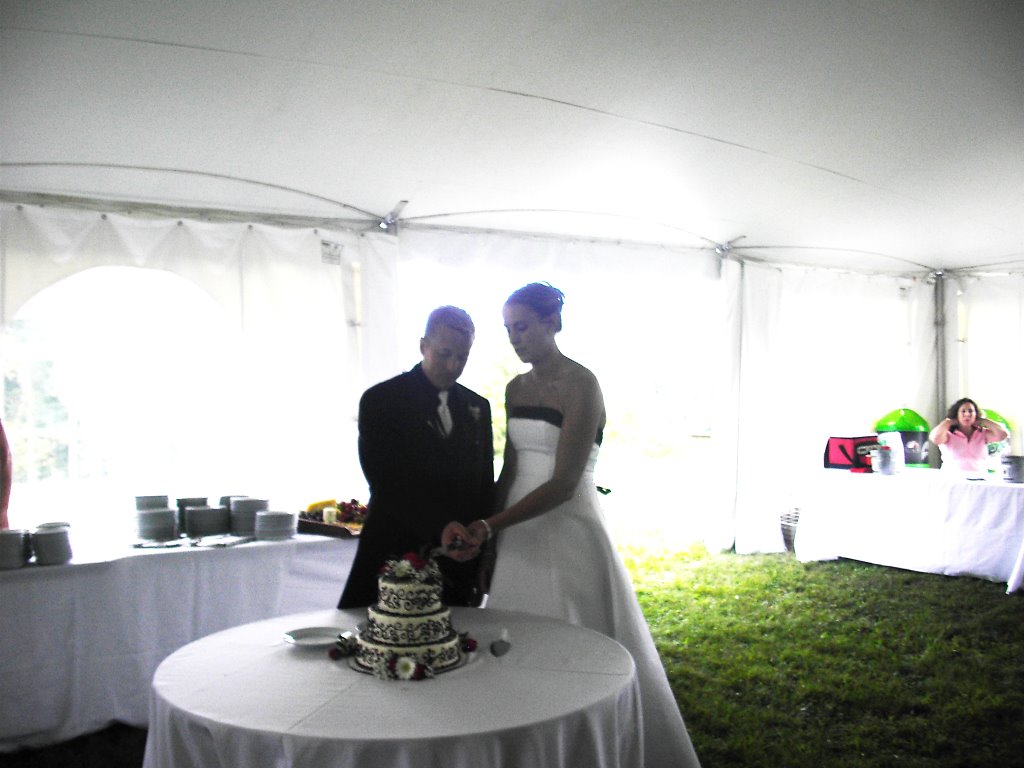
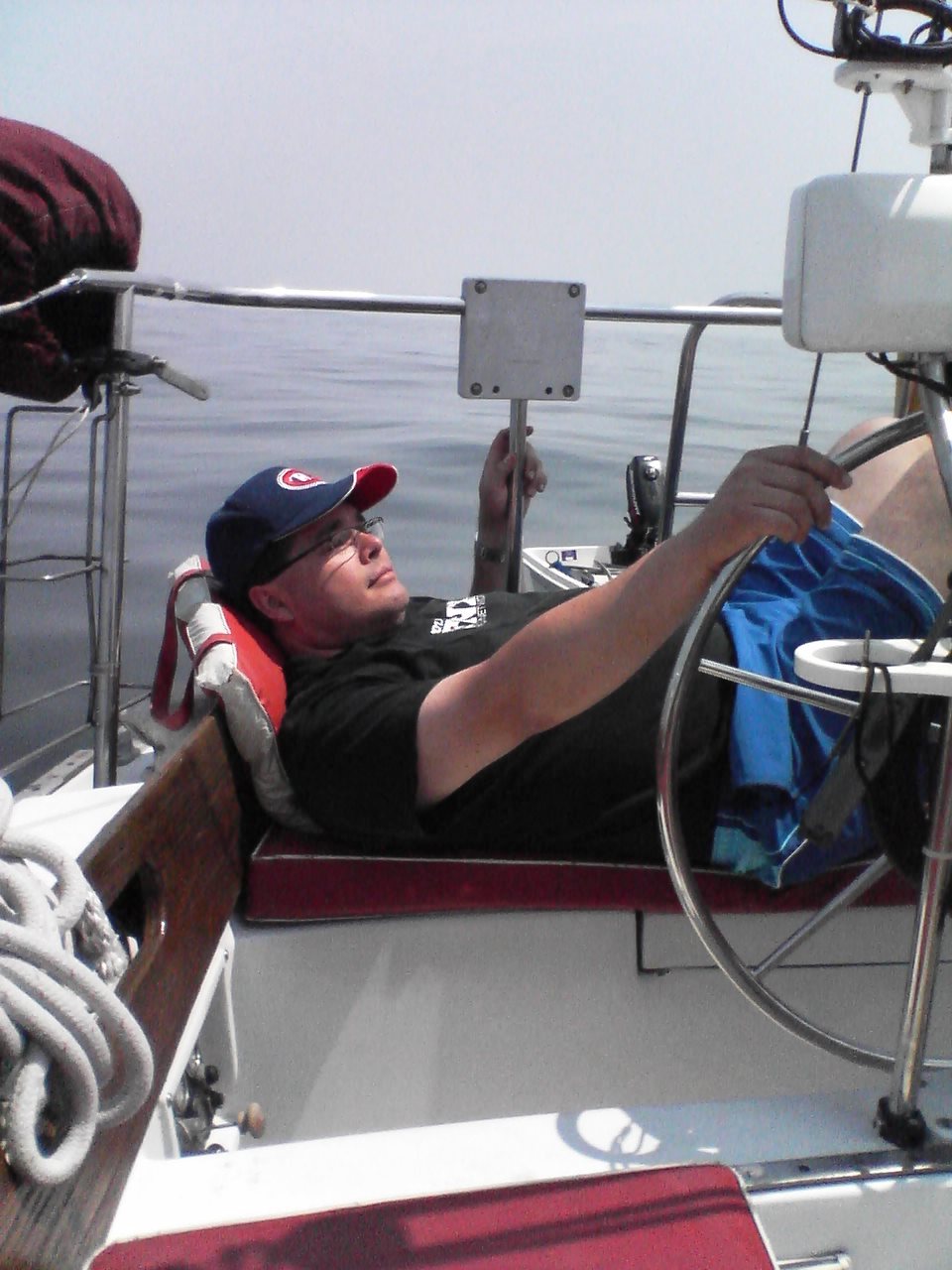
Wednesday, September 27, 2006

Fox hunt pictures Groton and Pace in Carlsile

Hot dog sellers at pace from Rotary

Hounds in their pen before the hunt
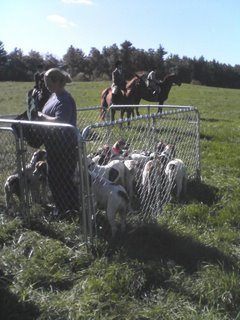
Hounds being released
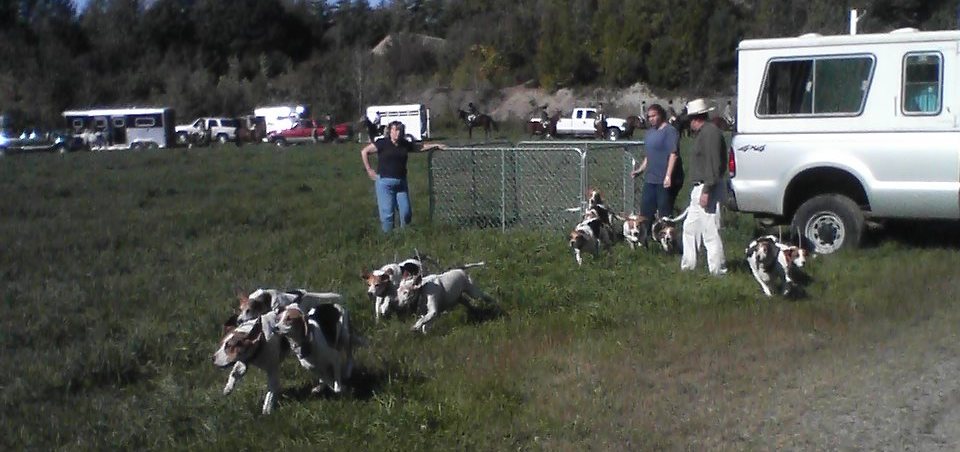
Staff of "whippers in " following the hounds
Thursday, September 14, 2006

Bar Harbor Maine


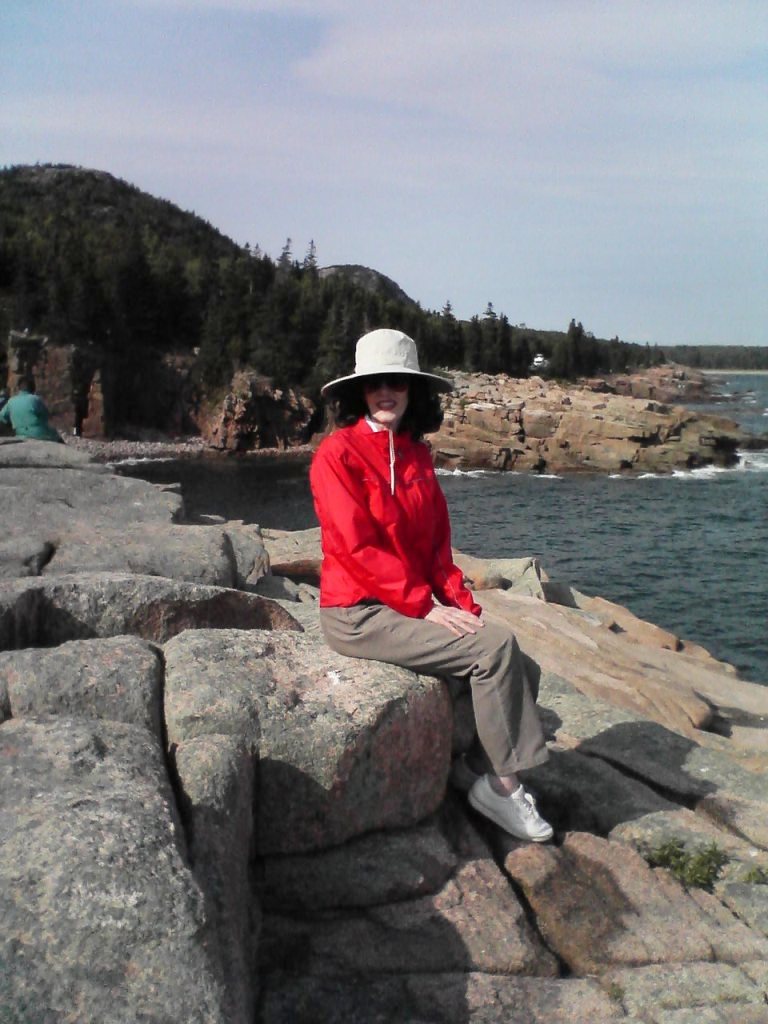
Last week we journeyed Down East to the Mt. Desert region of Maine to help our cousins close up their vacation home on Beech Hill pond for the winter. During our stay we drove along the rugged coast stopping for an alfresco lunch on the terrace of the Bar Harbor Inn and continuing to Southwest Harbor to view the boats.
Saturday, September 09, 2006

Sailing Poodle


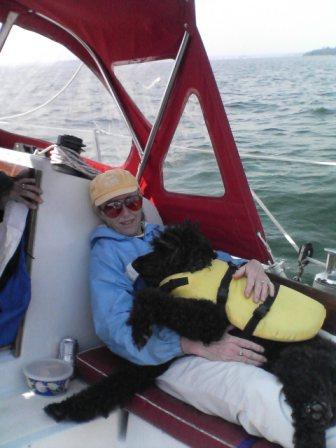
We had a beautiful day sailing with friends on Casco Bay. Our poodle was protected against untoward events by her yellow life preserver. Fortunately there were no such events.

Thursday, September 07, 2006

Horses are dangerous


A good portion of yesterday evening was spent with a friend in the hospital emergency room. She was putting her two horses out after feeding when one tried to kick the other and connected with her leg. Her husband was on the way to North Carolina and he called asking me to go and check on her as she had just called him. Upon arrival there was a limping redhead with blood all over one leg of her jeans. She could walk but not well. A quick trip to the local emergency room resulted in bandages, a tetanus shot, IV antibiotic, X-rays and stitches. My wife was at a meeting and came to relieve me at the hospital around 11:00 pm and the injured person was home by 1:00 am. After five stitches the healing begins.

Tuesday, August 29, 2006

How do you know that you are a redneck?


We recently purchased a house near Southern Pines NC for our anual jont to the South for horseback riding in March after skiing in Aspen. This is redneck territory as I met our neightor on her front porch with white legs because she was in the process of her annual leg shaving. It seemed to go rather well. She is a dear sweet person who currently has very smooth legs. The place we purchased is rehab in the most general sense of the term. Although Jeff Foxworthy said that we should find a car buried in the front and didn’t, pretty much everything else including several washer, dryers the odd stove and an number or rum bottles were there. The most interesting find was a decade old bottle of pickled pigs feet. It is a different culture for us Yankees. Hopefully our cold blood will adapt.

Sunday, August 20, 2006

HIV tests everyone

My R&D groups developed several HIV tests, some still used around the world. They included rapid onsite tests, high volume screening tests and confirmatory tests. Many of these products received FDA approval. The Centers for Disease control and the World Health Organization
http://www.phppo.cdc.gov/dls/ila/hivtraining/ are now pushing rapid testing as it is the most reasonable testing method for developing countries as a large health infrastructure is not required. Such rapid testing makes sense even in certain situations in developed countries. A single visit can give an immediate result although confirmatory testing should also be carried out in a timely manor. No test is perfect. We once proposed to make a rapid confirmatory test but could not get support from an FDA advisory panel who wanted to rely on the expensive and old fashioned western blots. So, it is possible to perform rapid screening and rapid confirmatory tests. The market for confirmatory testing is smaller than that for screening tests so there is not much of a commercial pressure to create such rapid confirmatory tests. At this stage, government support would probably be required. The picture is of the Orasure rapid test for HIV. I consulted on HIV testing at Orasure a number of years ago but not on this specific rapid test. It is gratifying that such HIV rapid tests are now getting the support that they deserve. My groups developed a rapid test using different technology that is currently be used by the millions in Africa. This test was discussed in a previous blog.

Saturday, August 19, 2006

The curse of Indian food

Blue skies with white whispy clouds complement the sailboats floating quietly in the moring field. The effects of yesterday’s Indian lunch near Harvard square with biochemical friends seems to have warn off so that I can more readily enjoy such a picturesque visage. That makes two Indian meals that were accompanied by significant discomfort in the space of the a month. The food wasn’t very spicy but there must have been some onerous type of molecule hiding in the yellow curry that severely impacted my digestive system.

A check out of the Windchaser showed it to be in good shape but after a run of the engine to charge the batteries it was away home. The meeting yesterday with such great minds had gone well and hopefully will result in a mutually beneficial future. Regardless, is was pleasant to visit with old friends discussing past adventures and future potentials.

Thursday, August 17, 2006

Chemical screening tests for the detection of cancers

For lunch, a couple of old biochemist friends from Harvard and MIT and I enjoyed Indian food just off Harvard square while discuss consulting strategies and new opportunities in biotechnology. The conversation drifted into new markers for cancer detection. Upon arriving home there was an Email from another consultant asking for advice on another cancer test. A number of such tests exist but few have value in screening the general population (PSA for prostrate cancer is an exception although even that test is criticised for too many false positives). Most cancer markers are chemicals that we all have but become elevated when cancer is present. The problem is that early cancer detection requires the measurement of low levels very close to the levels in people without cancer. This means that there is a high rate of false positives if the measurement is very sensitive as the levels seen in an early cancer are very close to the normal levels. The false positives are expensive to work up and cause unneeded concern. Once the cancer progresses the level will rise and is more easily distinguished from the normal levels. Many such markers have utility for following the course of the disease and the success of therapy. The overall problem is that cancer cells are normal cells that are dividing without proper control and contain no unique chemicals that can be used to unequivocally identify them.

Saturday, August 12, 2006

Gnome sited on Groton Rail Trail


While cycling on the rail trail this Gnome was spotted taking a rest. While overall a nice fellow he wasn’t much of a conversationalist. Perhaps he works for travelocity and was doing research on travel opportunities on the rail trail.

Sunday, August 06, 2006

Sailing in Casco Bay

Yesterday my wife, her mother and I enjoyed beautiful blue skies, pleasant temperatures and stiff breezes as the Windchaser bent to the wind. Being Sunday, there were many other sailors on the water enjoying beautiful views while providing them to folks on shore. Our poodle enjoyed the adventure except for extreme healing that made its positioning difficult in the cockpit well. This annoyance was compensated for by snacks along the way. The only difficulty was that the pickup buoy on the mooring became tangled in the pendent. I had dropped my passengers off at the dock and was single handing. Untangling the pickup buoy required leaning over the side during a slow pass and giving it a yank. Thus freed, the rest of the operation went without a hich.

Friday, August 04, 2006

Bone density analysis and a patient’s medical history


The medical community continues to make progress toward a fully digital future. People may no longer have to struggle trying to read a doctor’s handwriting. I recently talked to a company trying to improve the situation by automating much of the data collection, transmission and archiving in this area. The digital future means that there will be fewer transcription errors and critical information will be available to medical personnel in a timely fashion. There is always the issue of confidentiality but such issues are not insurmountable obstacles. This last year I had too many interactions with the medical community due to knee and back injuries. Several times, I was asked to provide a medical history. It improved with each recitation as additional ancient maladies came to mind. I know I should keep a list no matter how depressing. However, hopefully in the not too distant future doctors will not have to rely on my pain and or drug (therapeutic not abused) compromised level of recall. There should be a living document recording my diseases as they occur that would be available to emergency room and other health professionals as required.

Wednesday, August 02, 2006


Wedding in Vermont

Over the weekend we attended the wedding of the daughter of old friends. It was a big Irish wedding with great ceremony, food, drink, dancing and comradre late into the evening. The wedding was at a new catholic church with the reception in tents at the family home on a hillside facing Mt Ascutney. Our best wished to the new bride and groom.

Sunday, July 30, 2006

Update on Rapid HIV test - Capillus lives

The rapid HIV test discussed in the previous post was developed at Cambridge Biotech which no longer exists. The technology for this test was sold to Trinity Biotech ( www.trinitybiotech.com) which is currently selling several million tests a year primarily into Africa. It is great to see a product one helped develop continue to aid people around the world.

Wednesday, July 26, 2006

Rapid HIV test used in Africa


A number of years ago I worked in development at Cambridge Biotech, which developed and manufactured a number of state of the art HIV test systems. One of our last products to be introduced was a 5-minute test for HIV that used a disposable slide and electronic battery operated reader. If the sample was positive a latex solution formed clumps as the sample flowed through capillary channels in a plastic slide. The results could be read visually or preferably, by the instrument which eliminated interpretation errors. A science magazine, New Scientist, had an article on the issues of routine HIV testing (July 22 2006 pages 8-9). The article included a picture labeled “testing in Africa needs to be backed by treatment” which is of an African reading one of the slides from our product. It is great that the product is still out there helping people.

Friday, July 21, 2006

The Neanderthal genome is to be sequenced


The extinct Neanderthal are our closest relatives. Some believe that we may be a human – Neanderthal hybrid but mitochondrial DNA from ancient bones found only a very distant relationship. The results suggested and humans and Neanderthals had a common ancestor 500,000 years ago, long before modern humans evolved. The sequencing technique to be used in this new study is very different from that used in the human genome project. That technique sequenced relatively long pieces of DNA but the ancient DNA extracted from fossil bones is too short for such techniques. Scientists from Germany's Max Planck Institute for Evolutionary Anthropology are teaming up with a company in Connecticut to map the genome. The company, 454 Life Sciences Corp. has developed an microwell technique using very small beads that can sequence a number of DNA segments in parallel with little equipment and is much better in sequencing short pieces of DNA than more classical techniques. Only 5% of the DNA is Neanderthal in these samples the remainder being bacterial contamination but as bacterial DNA sequences are so different they can easily be identified and removed from the database. It is hoped that this information will aid us in understanding what makes us human.

Thursday, July 20, 2006

More problems with nicotine

Srikumar Chellappan of the University of South Florida, in Tampa, led a study that demonstrated the stimulation of cancer cells by nicotine. Although this is bad news for smokers, understanding the mechanism may aid the development of new anticancer agents. Laboratory results have shown that blocking the nicotine receptors on cancer cells can halt their growth. Experiments revealed that nicotine caused a molecule called Raf-1 to bind to a key protein called Rb, which normally suppresses tumors. It is hoped that chemicals can be found that will inhibit the binding of Raf-1 to the Rb cancer inhibitor.

Journal reference: Journal of Clinical Investigation (DOI: 10.1172/JCI28164)

Wednesday, July 19, 2006

Sailing on Casco Bay Maine

This was a two day adventure. My Swedish friend and I meet in S. Freeport Monday for a sail around Harpswell Neck back up to Zeke Island back of which is a beautiful hurricane hole with moorings. The trip out was in dense fog requiring the use of the mapping GPS and radar to avoid the numerous rocks on the way not to mention the floating forest of lobster pots. With all these pots it is a wonder that there are any lobsters wandering around the bottom. Compared to inland Massachusetts, the temperature was cool and of course, in the fog there was no problem with exposure to the sun. We motored all the way. Hans and I were to meet Jim and Tiger for dinner but there was no answering machine at their rented cottage and their cell phones did not work. We motored up to the Rt 123 bridge and picked up a mooring hoping that someone would show up. The pendants on the mooring were cover with gunk so whoever owned it had now used the thing in years and I am sure didn’t mind our brief stay. After about an hour, a guy appeared on the bridge riding a bright red motorcycle and started waving in our direction. We left the mooring and motored over to the bridge with some trepidation as the strong current could pull us under resulting in a rapid and catastrophic de-masting. It was Jim. After a brief conversation, he went to his cottage, retrieved his powerboat, and came out to lead us back down the river a mile or so to Zeke Island and the well protected mooring field. After a little wine, he left promising to return at 7:00 pm to pick us up for dinner. We took the dingy in to the dock with a short ride taking us to his rented house on the estuary. Jim’s wife Tiger prepared a delicious meal of grilled flank steak with salad followed by carrot cake lubricated with more wine.

Hans and I sleep on the boat. In the morning we had Rye Crisp and peanut butter with coffee for breakfast. Perhaps this is a Swedish thing. The weather report sounded bad with hail and heavy rain predicted for the afternoon so the four of us got an early start on the way back to South Freeport. Both Hans and Jim are good sailors so we did many tacks down the narrow channel entering the ocean past Bailey’s Island. The weather was beautiful with white fluffy clouds against a deep blue sky. The wind blew at 10 to 15 kts allowing the Windchaser to spend a good deal of time over on her side with the white foam splashing. After playing around outside, we headed back past Eagle island picking up a mooring in the goslings for an alfresco lunch. The sail back was short allowing us to reach the home mooring before strong winds would make it difficult. All in all it was a great trip.

Sunday, July 16, 2006

Cycling in Groton MA


It was to be a very hot day so cycling to the Main Street CafĂ© in the morning seemed like a good way to get in a ride before the temperature rose. The rail trail was close by and provided a level path to downtown Groton. The coffee group was smaller as it was Sunday. After a couple of ice coffees I headed out to Johnson’s for more talk and some cold water. On the way back I visited S and A to talk about furnishing second homes and then stopped by Tiny’s. They just had a new stone wall built next to the barn and are turning it into yet another flower garden. The was home was easy hitting the level rail trail again. After mucking the stall I went shopping as Wednesday is my wife’s birthday. Tomorrow it will be a couple of days of sailing in Maine.

Thursday, July 13, 2006

Working on the front lines of the anti-retroviral roll-out

Working on the front lines of the anti-retroviral roll-out

Speaker's Name: Janet Giddy, MBChB; Wendy Mphatswe, MBChB; Henry Sunpath, MBChBSpeaker's Affiliation: McCord HospitalLocation_Line 1: Room 227, Tosteson Medical Education Center (MEC),Location_Line 2: Harvard Medical School

Tuesday evening I attended the above seminar on Longwood Ave. Dr. Giddy described the work being done at a McCord Hospital in Durban South Africa. The current president of the Country does not believe that HIV causes AIDS and has been a problem in developing an effective AIDS program. This is in a country in which some areas have a 50% incidence of HIV infection. It is not that bad everywhere but bad. Things are coming around especially with money from President Bush’s HIV program. The new protease inhibitor drugs work and are available but pricy. One of the major problems is compliance in therapy or getting people to take their drugs and stay on the program. Also, reaching people outside the urban centers especially to enlist them in the program is difficult. Three visits and sophisticated testing is required to select the appropriate therapy and difficult choices must be made with regard to who can be treated effectively and who is too far gone to benefit. Treatment of pregnant HIV positive mothers can be very effective in reducing the mother to child transmission frequency.

I was impressed with the testing capabilities available at the McCord Hospital. They seem to be in close contact with people at Harvard and participating in a number of joint studies.

Monday, July 10, 2006

Sailing Casco Bay Maine with Friends


Over the weekend I enjoyed two great days with friends. One came up with me on Friday and we sailed down the bay out past Baily’s Island and back through Potts Harbor. We grilled stake tips on the stern and talked till midnight. In the morning it was bacon an eggs with English muffins before the others came up to join us. We brought the Windchaser in to the dock for loading without incident. Docking is not my favorite thing. After loading an incredible amount of food and drink we set out for the ocean. Breezes were not good so after passing Eagle Island we sort of drifted out past the Portland light. While drifting two sailing mega yachts went by, motoring as there was no wind. This time of year there are mega yacht races in Boothbay and these boat must have been participating. One of these craft had six spreaders on the main mast. It was tall and thin. While drifting Mark and friend went out in the dingy and took photos of the Windchaser with a professional digital camera that takes 16 megabyte pictures. On Sunday evening Buzz gave me some fantastic pictures of the Windchaser under sail in a light breeze. After picture taking the wind came up and the merry crew sailed back to Freeport past Long and


This is the way it should be.